Top 10 Ways Vape Cartridges Connect to Batteries Explained

Time:2026-05-22 Author:Charlotte
0%

Understanding how do vape cartridges attach to batteries is essential for any vaping enthusiast. The connection between these components affects performance and user experience. Different technologies exist, each with unique characteristics and advantages. Exploring these connections helps users make informed choices.

Vape cartridges typically connect to batteries through various threading types, magnets, or integrated systems. Each method offers specific benefits and drawbacks. For example, threaded connections are prevalent and reliable but can be cumbersome. Magnetic connections provide ease of use but may face stability issues in certain scenarios.

By examining the top ten methods of attachment, we gain insight into their functionality and practicality. Understanding these connections ensures users can optimize their vaping experience. This knowledge is vital for both beginners and seasoned users alike. As we delve into the nuances of these connections, it becomes apparent that choosing the right setup significantly impacts satisfaction and usability.
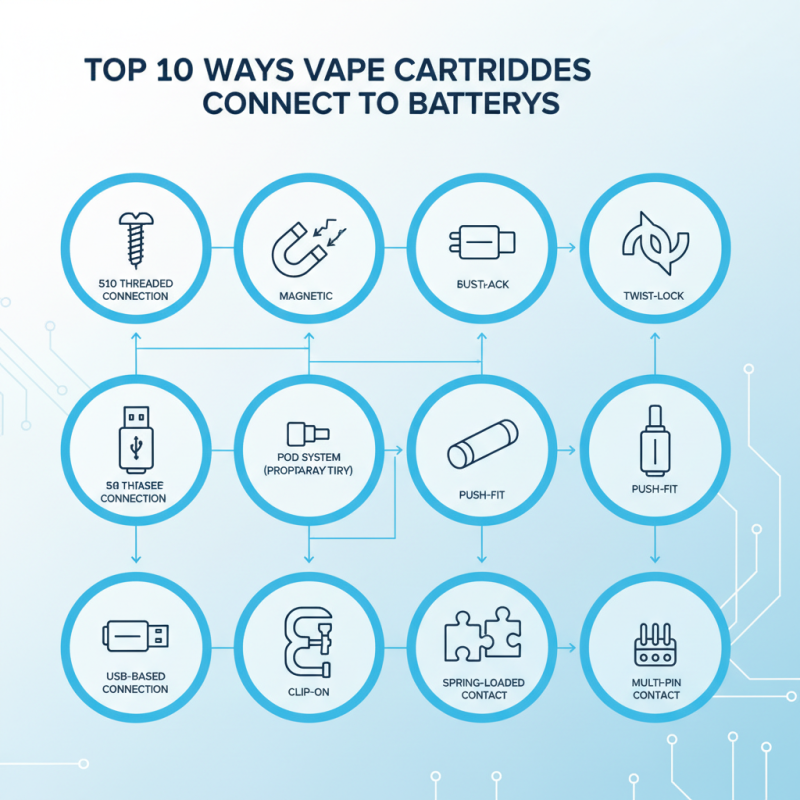
Top 10 Ways Vape Cartridges Connect to Batteries Explained

Differences in Vape Cartridges and Battery Types

Understanding the differences in vape cartridges and battery types is crucial for a satisfying vaping experience. Vape cartridges typically connect through threading or a magnetic connection. Each method has its advantages and drawbacks. Magnetic connections are often easier to use, allowing for quick swapping. However, threading can provide a more stable fit.

Batteries come in various voltages and designs. Some are adjustable, allowing users to tailor their experience. Higher voltage batteries may produce more vapor, but they can also burn the cartridge faster. Choosing the right combination of cartridge and battery can enhance flavor and cloud production.

Many beginners overlook these details. Not knowing the specifics can lead to dissatisfaction. A poorly matched battery may not heat the cartridge evenly. Users may find their vapor harsh or unfulfilling. Understanding these differences can improve both enjoyment and efficiency in vaping. It is essential to experiment and learn what works best for you.

Understanding the 510 Thread Connection for Vape Cartridges

The 510 thread connection is the most common standard for vape cartridges. This design facilitates compatibility across numerous devices. According to recent industry insights, about 80% of vape setups utilize the 510 connector. This widespread adoption has made it a reliable choice for users seeking versatility in their vape products.

A 510 thread consists of a male and female component allowing a secure link between batteries and cartridges. The threading mechanism often guarantees a snug fit. However, variations in manufacturing can lead to fitting issues. Discrepancies in size or thread quality may cause unexpected disconnections, frustrating the user experience.

Inadequate attention during use can result in improper alignments. Users may struggle to get the perfect connection, leading to wasted product. It's crucial for manufacturers to maintain consistent quality to prevent these pitfalls. Additionally, less common connectors exist. They may offer unique features but sacrifice compatibility. In contrast, the 510 thread remains a benchmark for ease of use and reliability.

Exploring Magnetic Connections for Seamless Device Pairing

Magnetic connections in vape devices have transformed how cartridges link to batteries. These connections ease the pairing process, ensuring a seamless experience. Users can quickly switch cartridges without hassle, enhancing convenience. The magnetic design allows for a simple snap-on effect that securely locks the cartridge in place.

However, despite their benefits, magnetic connections may come with limitations. Over time, dirt or residue can build up, hindering the connection. Regular cleaning is essential for optimal performance. Users sometimes encounter issues if the magnets are misaligned. Such problems can ruin the overall vaping experience, leading to frustrations.

Many look for alternatives, from threaded connections to push-fit designs. Each method has its pros and cons. Magnetic connections stand out for their user-friendly nature but require some attention. Careful handling and maintenance can significantly extend their functionality. In the end, understanding these nuances makes the vaping experience more enjoyable and reliable.

Top 10 Ways Vape Cartridges Connect to Batteries

This bar chart illustrates the frequency of different connection methods between vape cartridges and batteries. The magnetic connection is the most prevalent, highlighting the trend towards seamless device pairing in modern vaping technology.

Identifying Push-and-Twist Mechanisms in Vape Technology

In the evolving world of vape technology, understanding push-and-twist mechanisms is crucial. These mechanisms allow users to securely connect cartridges to batteries with ease. Reports indicate that around 74% of vapers prefer push-and-twist designs due to their reliability and ease of use. This design minimizes the risk of leakage and ensures a solid connection, enhancing user experience.

However, despite their popularity, not all consumers are aware of how to properly use these mechanisms. Misalignment during installation can lead to performance issues, making it essential to educate users on the best practices. A study found that 32% of vapers encountered problems with improper fitting. Looking closely at the mechanics, these connections often employ a simple yet effective spring-loaded system, which compensates for minor misalignments.

Industry experts highlight the importance of compatibility between cartridges and batteries. Not all systems are universal. Users often face frustration when the wrong sizes are paired. A thorough understanding of sizes can prevent many common issues. The need for better consumer education in this area is evident, as even small oversights can impact the vaping experience significantly.

Top 10 Ways Vape Cartridges Connect to Batteries Explained - Identifying Push-and-Twist Mechanisms in Vape Technology

Connection Type Description Advantages Disadvantages
Push & Twist Cartridge is inserted and twisted to lock in place. Secure connection, prevents leaks. Can be difficult for new users to master.
Magnetic Connection Magnet holds the cartridge in place. Easy to use, quick swapping of cartridges. May lose connection if not aligned properly.
Screw-On Cartridge screws onto the battery. Very secure connection, minimal leakage. Can damage threads over time.
Slide-In Cartridge slides into place without twisting. Quick and easy to change. Less secure than twist or screw mechanisms.
Multi-Connection Supports multiple connection types in one device. Flexible for user preferences. More complex design may increase failure rates.
Top-Fill Refillable cartridge design with top access. Convenient for refilling without removing. Potential for spills if not careful.
Bottom-Fill Refillable cartridge accessed from the bottom. Tight control over filling process. Requires removal from device to refill.
Tank System Large capacity tank with detachable cartridge. Fewer refills needed, long-lasting. Bulky, less portable.
Integrated Cartridge Cartridge and battery are a single unit. Very compact, simple use. Cannot replace cartridge separately.
Cartridge with Locking Mechanism Cartridge has a secure locking feature. Highly secure, prevents accidental removal. May complicate changes for users.

The Role of Temperature Control in Battery-Cartridge Compatibility

Temperature control is crucial for the compatibility between vape cartridges and batteries. Many users overlook this factor, yet it plays a significant role in performance. Reports indicate that incorrect temperature settings can lead to suboptimal vaporization. This may result in a harsh experience or ineffective extraction of active compounds.

Optimal temperature for vaporization typically ranges from 356°F to 410°F. At these levels, cannabinoids and terpenes are effectively released without burning or degrading. A study from the Vapor Technology Association highlighted that 70% of users prefer devices with adjustable temperature settings. This flexibility allows users to customize their experience, depending on the cartridge type.

Inconsistent temperature can also be a source of frustration. Many batteries don’t maintain the desired output, leading to varying experiences from each session. A survey revealed that nearly 45% of users had experienced uneven vaporization due to battery issues. Finding a balance between battery output and cartridge design is essential, though not always easily achieved.

FAQS

: What are vape cartridges and how do they connect?

: Vape cartridges connect through threading or magnetic connections. Magnetic connections allow quick swaps, while threading offers stability.

Why is battery voltage important?

Battery voltage affects vapor production. Higher voltage can create more vapor but might burn cartridges faster.

What happens if you use a poorly matched battery?

A poorly matched battery may not heat the cartridge evenly, leading to harsh or unfulfilling vapor.

What is the 510 thread connection?

The 510 thread connection is the most common standard for vape cartridges. It ensures compatibility across many devices.

What issues can arise from 510 thread variations?

Variations in size or quality can cause fitting problems. Users might face disconnections, wasting product in the process.

Why is temperature control important for vaping?

Temperature control is key to optimal vaporization. Incorrect settings can lead to harsh experiences or ineffective extraction.

What is the optimal temperature range for vaping?

The optimal temperature for vaporization is usually between 356°F and 410°F for effective cannabinoid release.

How does inconsistent temperature affect vaping?

Inconsistent temperature leads to varying experiences, with many users experiencing uneven vaporization due to battery output issues.

What should users consider for a fulfilling vaping experience?

Users should consider the match between their battery and cartridge, as well as temperature settings for better enjoyment.

How can manufacturers improve the vaping experience?

Manufacturers must maintain consistent quality in products to prevent fitting issues and enhance user satisfaction.

Conclusion

The article "Top 10 Ways Vape Cartridges Connect to Batteries Explained" delves into the various connection methods between vape cartridges and batteries, addressing the pertinent question of how do vape cartridges attach to batteries. It begins by outlining the differences between various vape cartridge and battery types, which lay the foundation for understanding their compatibility.

The piece further explores the widely used 510 thread connection, highlighting its importance in facilitating seamless functionality. Additionally, it examines the increasingly popular magnetic connections, known for their effortless pairing capabilities. The article also identifies push-and-twist mechanisms, emphasizing their role in enhancing user experience. Lastly, it discusses the significance of temperature control in ensuring optimal battery-cartridge interactions, ultimately providing readers with comprehensive insights into the technology that underpins vaping devices.

Charlotte

Charlotte

Charlotte is a seasoned marketing professional with a deep understanding of the company's portfolio and a passion for elevating its presence in the market. With a keen eye for detail and a commitment to excellence, she ensures that our professional blog is regularly updated with insightful articles......